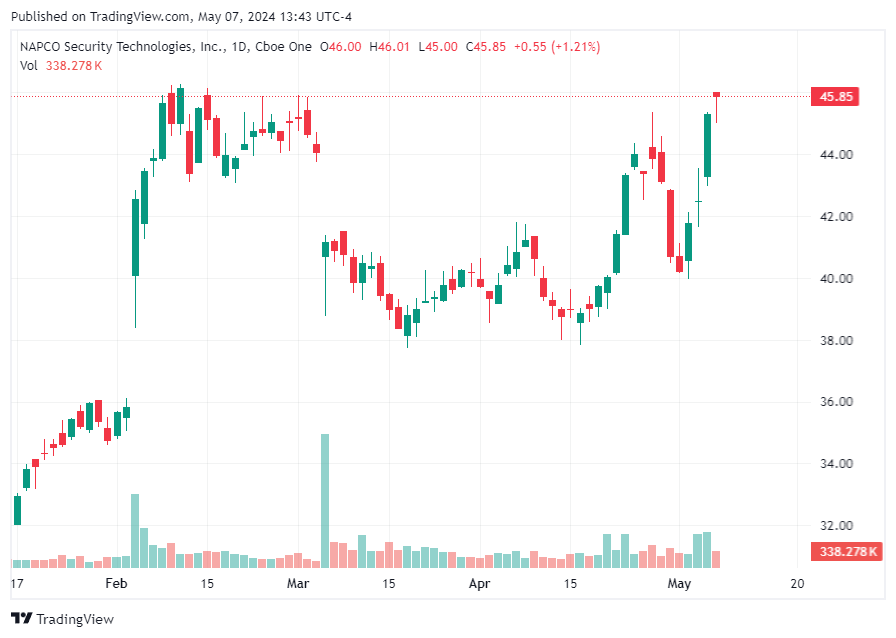
Napco NSSC 0.00%↑ reported Q3 24 earnings this week and, as usual, crushed them. Shares again traded up towards their all-time high. Napco has been a core position in my portfolio ever since I doubled down last summer after shares plunged following accounting irregularities, which only affected earnings but not cash flows. The company has continued to execute well since then. Let’s examine the results.
Q3 results
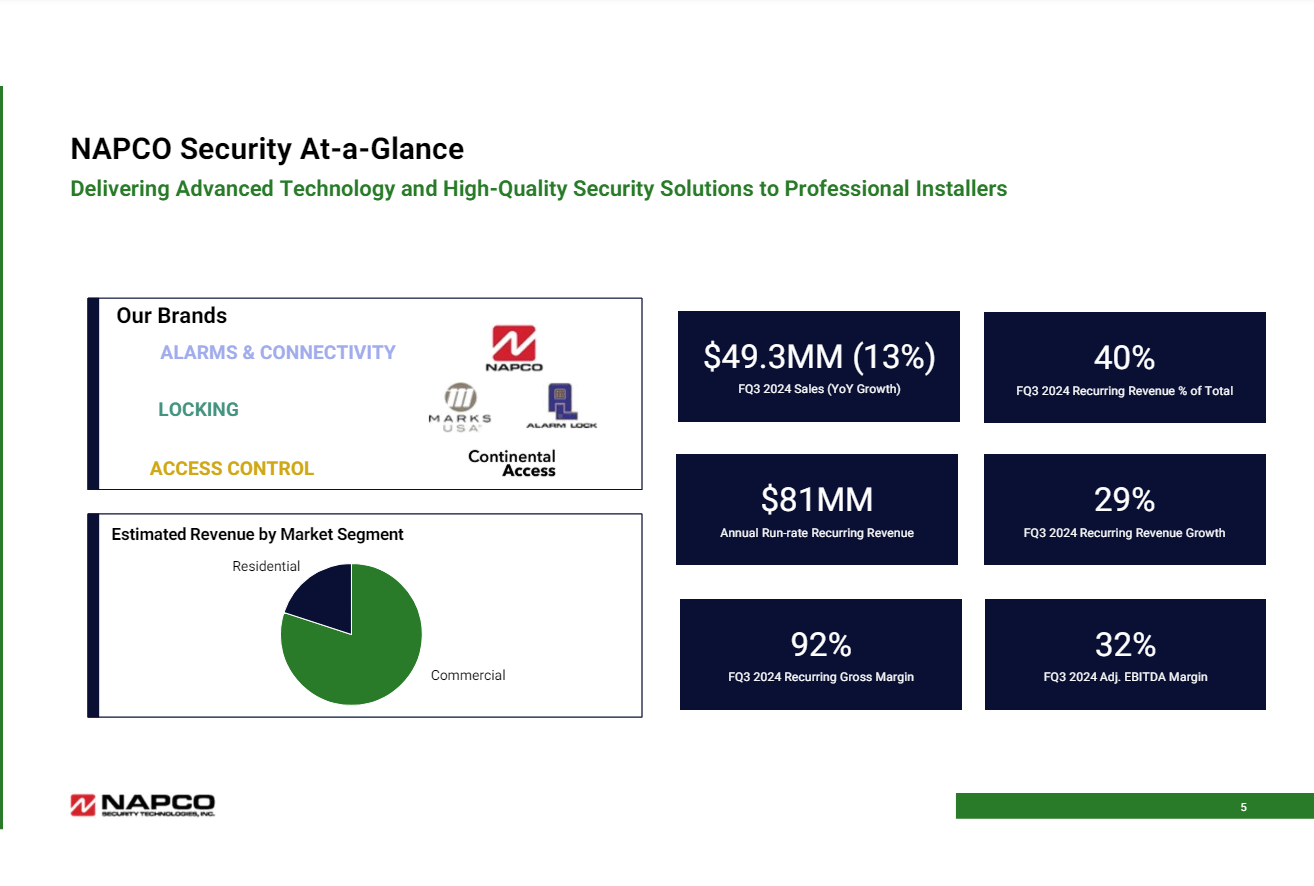
Napco saw its revenue growth accelerate to 13%, almost crossing the $50 million revenue per quarter milestone. The more important segment, recurring revenue, grew by 29% to an annual run rate of $81 million. The most impressive part of this was gross margins expanding to 92%. Initially, Napco guided for 80% gross margins for this segment, but it has far exceeded its expectations. The company primarily sells to distributors, who are also interested in selling recurring revenue products. All of Napco’s segments have recurring revenue products nowadays, giving them a competitive advantage over competitors to get into new distribution channels. However, the market is fragmented with many large players like Honeywell (competes in Alarms & Connectivity and Access Control), Bosch (Alarms & Connectivity), United Technologies (Access Control) and Assa Abloy (Locking). Locking represents 60% of hardware sales and grew 16% YOY and 10% sequentially. Napco expects further growth based on record interest and sales leads at a recent trade conference. The hardware segment is a tough and cyclical market. Last year, Verizon discontinued 3G, and distributors rushed to stock newer radios to support the switch. This catapulted radio sales, making for tough comps this year. Radio sales increased 63% sequentially, but still were 13% lower than last year. That’s why the increasing share of recurring revenue makes Napco not just more profitable, but also more predictable and less cyclical. For Napco, hardware sales are a gateway to recurring revenue; in light of that, it’s even more impressive that they generate a healthy margin on their products. It also raises the question of whether selling the hardware cheaper to accelerate recurring revenue growth could be possible.